


In one sentence…
Recommerce is the practice of extending the life and value of products after their first sale by reselling, renting, repairing, or offering them through memberships and subscriptions. For fashion brands, recommerce turns single-sale items into ongoing revenue streams and customer touchpoints.
Table of Contents
- Key Highlights
- Introduction
- Defining Recommerce: The Modern Way to Buy and Sell
- How Recommerce Works for Fashion Brands
- Recommerce Business Models in Fashion
- Benefits of Recommerce for Brands and Consumers
- The Rising Popularity of Recommerce in Europe
- Ensuring Quality and Trust in Recommerce
- Challenges Facing Fashion Recommerce
- Sustainability and Environmental Impact of Recommerce
- Future of Recommerce in the Fashion Industry
- Conclusion
- Frequently Asked Questions
Key Highlights
- Recommerce gives pre-owned items a second life, supporting a circular economy and sustainability.
- This business model includes resale, trade-in, repair, memberships, subscription and rental models for various products, especially in fashion.
- Fashion brands can create new revenue streams and attract a new customer base by adopting recommerce.
- Recommerce is growing in popularity, driven by younger generations who value lower prices and reducing their environmental impact.
- Key challenges include managing logistics, ensuring quality control, and building customer trust in the secondary market.
- Different models like peer-to-peer platforms and brand-led buy-back schemes make it accessible for businesses to start.
Introduction
Have you ever wondered what happens to clothes after they’re returned or no longer wanted? Instead of ending up in a landfill, they can get a new beginning. This is where recommerce comes in. It’s a growing trend that’s changing how we think about shopping, especially in fashion. By giving products a second life, recommerce is a key part of the circular economy, offering a powerful way for brands to embrace sustainability and meet the demands of modern, eco-conscious shoppers.
Defining Recommerce: The Modern Way to Buy and Sell
Recommerce is essentially a modern take on an old idea: selling previously owned goods. Think of it as “reverse commerce,” where products move from the consumer back into the market for a second life. This business model is about more than just thrift shopping; it’s a structured way to reintroduce valuable items into the economy.
From vintage clothing to refurbished electronics, the secondary market is booming. Technology has made it easier than ever for both individuals and brands to buy and sell pre-loved items, creating a sophisticated and organised marketplace. Let’s explore what recommerce really means and how it stands apart from traditional retail.
What is Recommerce?
Recommerce gives pre-owned items a second life, supporting a circular economy and sustainability.
So, what exactly is recommerce? It’s the practice of buying and selling used, refurbished, or second-hand goods. The term comes from “reverse commerce,” which describes the process of giving products a new home instead of letting them go to waste. This approach supports the circular economy by keeping items in use for as long as possible.
This business model isn’t just about individual sellers on online marketplaces. Many brands are now adopting recommerce strategies. This includes everything from resale programmes for clothing to trade-in offers for electronics. The goal is to extend a product’s lifespan, reduce waste, and recover value from items that are still perfectly good.
Essentially, recommerce transforms the idea of pre-owned goods from a niche market into a structured and profitable part of the retail landscape. It allows both consumers and businesses to benefit from the secondary market, promoting more sustainable consumption habits. You can even use a shopify recommerce plugin to easily integrate this into your online store.
Differences Between Recommerce and Traditional Ecommerce
While both happen online, recommerce and traditional ecommerce operate on different principles. Traditional ecommerce focuses exclusively on selling brand-new items directly from the manufacturer or retailer to the consumer. The product journey is linear: create, sell, and that’s the end of its life with the brand.
Recommerce, on the other hand, is all about circularity. It creates a loop where pre-owned products are given a second life. This business model deals with items that have already been sold at least once. It’s not about new production but about extending the value of existing goods.
Here are the key differences:
- Product Source: Traditional ecommerce sells new items, while recommerce sells pre-owned, refurbished, or upcycled goods.
- Supply Chain: Ecommerce has a straightforward supply chain. Recommerce involves a “reverse” supply chain to source used products from consumers.
- Product Lifecycle: Ecommerce follows a linear “take-make-dispose” model, whereas recommerce promotes a circular “reduce-reuse-recycle” model.
Key Terms in Recommerce (Resale, Trade-In, Repair, Rental, Membership, Subscription)
Understanding key terms in recommerce is essential for navigating the industry effectively.
- Resale programs enable brands to sell pre-owned items, allowing shoppers to find unique pieces at lower prices while extending the lifecycle of fashion products.
- Trade-in programs encourage customers to return used apparel in exchange for store credit, helping brands retain customers while making circular participation easy and rewarding.
- Repair services allow customers to extend the life of products they already own. By offering repairs, brands can build trust, reduce waste, and strengthen long-term customer relationships.
- Rental services give customers temporary access to products without requiring full ownership. This model can increase product utilization and attract customers looking for flexibility, affordability, or occasional use.
- Membership programs create ongoing engagement by offering exclusive benefits such as early access, discounts, repair perks, or circular services. They help brands build loyalty and a stronger community around repeat use.
- Subscription programs provide customers with recurring access to products or services through a regular payment model. In recommerce, subscriptions can support rental access, repair bundles, product swaps, or curated circular experiences.
By prioritising sustainability and circularity, companies can reduce their carbon footprint and tap into the growing demand for recommerce solutions in the fashion market.
How Recommerce Works for Fashion Brands

Illustration generated with AI, edited by Weloop.
For fashion brands, entering the recommerce market is a strategic move that unlocks new revenue streams and strengthens customer relationships. Instead of seeing the second-hand market as competition, brands can lead the charge. By creating their own resale programs, they can control their brand image and ensure quality.
This can be done through dedicated sections on their websites, partnerships with recommerce platforms, or physical take-back schemes in stores. The fashion industry is perfectly suited for this model, as vintage and pre-loved items are often in high demand. Let’s look at the practical steps involved, from sourcing items to the technology that makes it all possible.
Sourcing Pre-Owned Fashion Items
The first step in any recommerce venture is sourcing inventory. Unlike traditional retail where you order from a supplier, sourcing pre-owned items is a more dynamic process. The goods can come from anywhere and everywhere, creating what is sometimes called an “alternative” supply chain.
For fashion brands, a common method is to source directly from their customers through trade-in or buy-back programs. Customers bring in their gently used items in good condition and receive store credit or cash in return. This guarantees a supply of authentic products and keeps customers engaged with your brand.
Beyond direct customer returns, inventory can also come from other channels. Resellers often find hidden gems at estate sales, liquidation events, garage sales, and flea markets. While these informal markets have existed for decades, technology now allows brands to source pre-owned items at a much larger and more organised scale.
Quality Control and Product Refurbishment
Once you’ve sourced pre-owned items, the next crucial step is quality control. To build trust with your customers, you need to ensure every product you sell meets a high standard. This involves a thorough inspection process to check for any defects, damage, or signs of wear.
For fashion, this means examining seams, checking for stains, and ensuring all buttons and zips are functional. For high-end items, authentication is also a key part of quality control. You need to verify that the product is genuine and not a counterfeit, which protects both your brand’s reputation and your customers’ investment.
After inspection, some items may require refurbishment. This could be as simple as professional cleaning or more involved, like repairing a small tear or replacing a button. The goal of refurbishment is to restore the item to a good condition, making it attractive and ready for its next owner.
Platforms and Technology Enabling Recommerce
Technology is the engine driving the growth of recommerce. Sophisticated platforms and digital marketplaces have transformed the second-hand market from informal garage sales into a multi-billion dollar industry. These technologies make it easy for brands to manage their resale operations efficiently.
Recommerce technology can help with everything from inventory management and pricing to authentication and logistics. There are now modern tools, like shopify recommerce plugins, that allow brands to seamlessly integrate recommerce programs into their existing ecommerce sites. This creates a unified shopping experience where customers can buy new and pre-owned items in one place.
Furthermore, a wave of innovative startups has emerged to provide specialised recommerce solutions. These companies offer platforms that handle the entire process, from customer trade-ins to refurbishment and final sale. By leveraging these online marketplaces and technologies, fashion brands can launch and scale their recommerce initiatives with confidence. Weloop is one such example, helping brands integrate circular models.
Recommerce Business Models in Fashion

Illustration generated with AI, edited by Weloop.
There isn’t a one-size-fits-all approach to recommerce. Fashion brands can choose from several business models depending on their goals, resources, and customer base. Each model offers a different way to engage with the secondary market and create value from pre-owned clothing.
The main options range from peer-to-peer platforms, where the brand acts as a facilitator, to brand-led initiatives, where the company takes full control of the process. Understanding these models is the key to finding the right fit for your business. We’ll now explore some of the most popular approaches in the fashion industry.
Peer-to-Peer Resale Platforms
In the peer-to-peer (P2P) model, the brand provides a platform that connects sellers of pre-owned items directly with buyers. Think of it as creating your own curated online marketplace for your customers. In this setup, you act as an intermediary, facilitating the transaction without ever holding the inventory yourself.
Sellers are responsible for listing their items, taking photos, and shipping them to the buyer. The brand’s role is to manage the platform, process payments, and ensure a secure and trustworthy environment for direct sales. Many popular fashion resale apps, like Vinted or Depop, are built on this P2P model.
For fashion brands, launching a P2P platform can be a great way to enter the resale market with lower overheads. It fosters a sense of community among your customers and allows you to gain valuable insights into the lifecycle and resale value of your products.
Brand-Led Trade-In and Buy-Back Schemes
A brand-led model gives you complete control over your recommerce program. With a trade-in or buy-back scheme, you encourage customers to return their used items directly to you. In exchange, they typically receive store credit, a discount on a future purchase, or sometimes cash.
This approach has several advantages. It guarantees a steady supply of authentic, pre-owned inventory that you can then refurbish and resell. It also drives customer loyalty and encourages repeat purchases, as the store credit brings shoppers back to your brand. This is an effective way to attract new customers who may be looking for lower-priced options.
Iconic brands like Patagonia and Levi’s have successfully implemented buy-back programs. By managing the entire process in-house, from collection to resale, they ensure the quality of their pre-owned offerings and reinforce their commitment to sustainability. This trade-in program strengthens the brand’s circular ecosystem.
Repair Services and Rental Networks
Beyond just selling, recommerce also includes models that extend a product’s life through repair and rental. Offering repair services is a powerful way to promote longevity and sustainability. Instead of a customer throwing away a favourite jacket because of a broken zip, you can offer to fix it, keeping the item in use for longer.
Rental networks are another fast-growing area, especially for high-end fashion and accessories. Customers can borrow an item for a special occasion or a short period, giving them access to luxury without the high price tag of ownership. This model is all about maximising the reuse of a single item.
Both repair and rental models shift the focus from ownership to access and care. They encourage a more mindful approach to consumption and create ongoing relationships with customers. By building a network for repairs or rentals, your brand can generate new revenue while championing a more circular fashion industry.
Benefits of Recommerce for Brands and Consumers
The rise of recommerce isn’t just a trend; it’s a win-win for everyone involved. For fashion brands, it’s a chance to boost sustainability credentials, tap into a new customer base, and create fresh revenue streams. There’s a growing demand for second-hand goods, and meeting it can significantly enhance a brand’s image.
For consumers, the benefits are just as compelling. Recommerce offers access to high-quality items at lower prices, making fashion more accessible. It also empowers shoppers to make more environmentally conscious choices. Let’s look closer at how both sides benefit from this circular model.
Enhancing Brand Sustainability and Image
In today’s market, sustainability is no longer a “nice-to-have”. It’s a core business imperative. By embracing recommerce, your brand can make a tangible commitment to the circular economy. Extending the life of your products reduces waste, saves resources, and lowers your carbon footprint, which is a powerful story to tell.
There’s a growing demand for second-hand goods, and meeting it can significantly enhance a brand’s image.
Adopting a resale program or a trade-in program sends a clear message that you are an environmentally responsible company. This can significantly enhance your brand image and attract a growing number of consumers who prioritise sustainability in their purchasing decisions. It positions you as a forward-thinking leader in the fashion industry.
Moreover, recommerce opens up valuable new revenue streams. Instead of losing sales to third-party resellers, you can capture that value yourself. This growing demand for pre-owned goods represents a significant financial opportunity, allowing you to profit from your products more than once while doing good for the planet.
Consumer Advantages – Savings, Choice, and Environmental Impact
For shoppers, the appeal of recommerce is clear and compelling. The most obvious benefit is the savings. Pre-owned items are sold at lower prices than new ones, giving consumers access to high-quality brands and products that might otherwise be out of their budget. This makes fashion more inclusive and affordable.
Beyond the price tag, recommerce also offers a wider choice. It opens up a world of vintage finds, past-season favourites, and unique pieces that are no longer available in mainstream retail. This enhances the shopping experience, turning it into a treasure hunt for one-of-a-kind items.
Most importantly, buying pre-owned allows consumers to reduce their personal environmental impact. Here’s a quick summary of the advantages:
- Lower Prices: Get more for your money by purchasing quality items at a fraction of their original cost.
- Unique Selection: Discover rare and vintage pieces that add character to your wardrobe.
- Sustainable Choice: Reduce your carbon footprint and help keep clothing out of landfills.
- Smart Savings: On average, shoppers can save a significant amount of money each year by buying second-hand.
The Rising Popularity of Recommerce in Europe
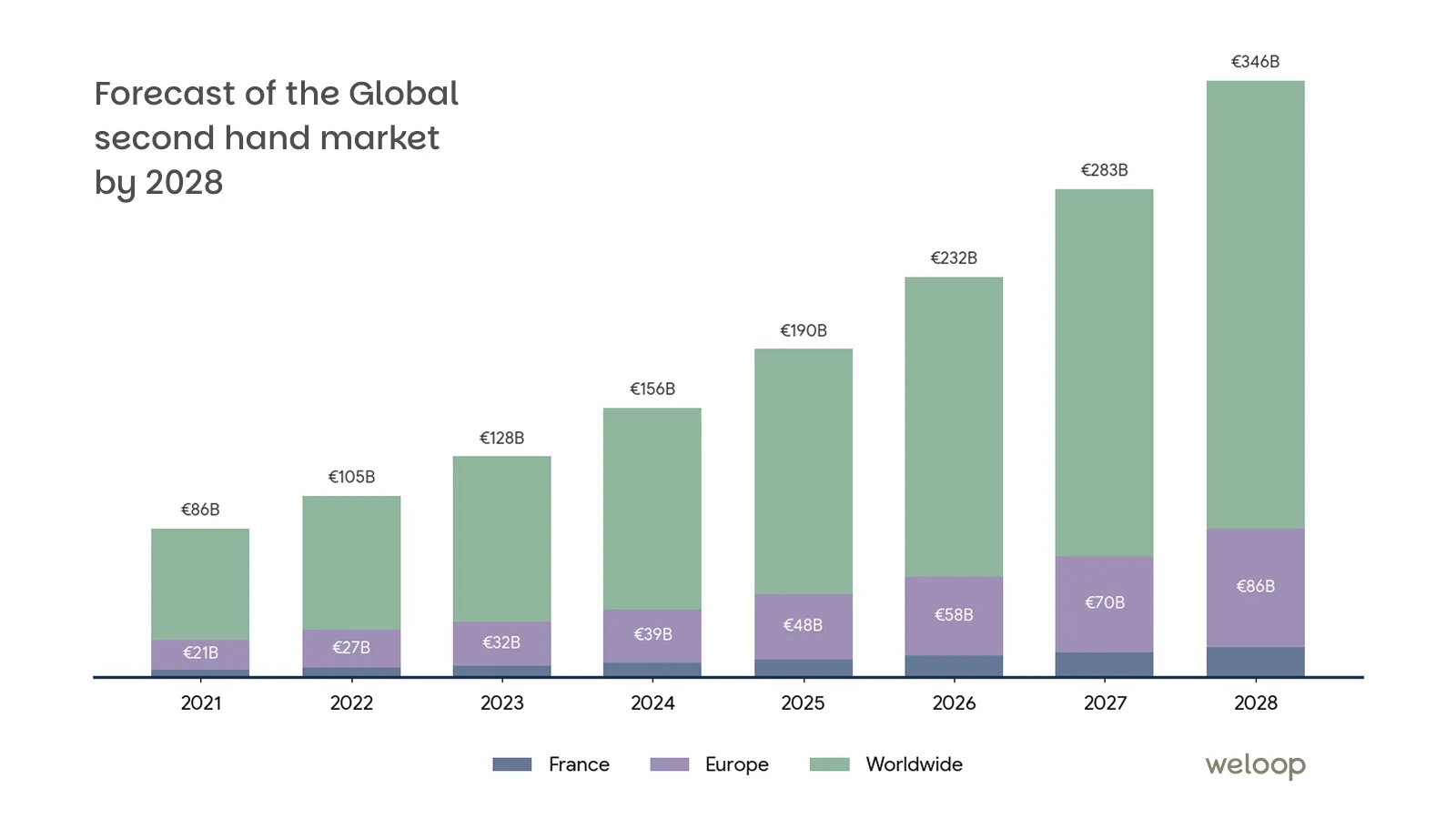
Forecast of the Global second hand market by 2028
The recommerce market is experiencing explosive growth across Europe and the UK. What was once a niche activity is now becoming mainstream, with more consumers than ever choosing to buy and sell pre-owned goods. This shift is particularly strong among younger generations, who are driving the growing demand for sustainable and affordable fashion.
Several factors are fuelling this trend, from economic pressures to a greater awareness of environmental issues. As a result, the European recommerce market is set to become a major force in the retail landscape. Let’s explore the consumer trends behind this growth and look at some successful examples.
Consumer Trends Driving Growth
The rapid growth of recommerce in Europe is being driven by a perfect storm of consumer trends. A major factor is the increasing environmental consciousness of shoppers. People, especially younger generations like Gen Z and Millennials, are more aware of the fashion industry’s environmental impact and are actively seeking more sustainable ways to shop.
Economic factors also play a significant role. With rising inflation and concerns about the cost of living, consumers are looking for ways to save money. Buying second-hand offers a practical solution, allowing them to purchase quality items without paying a premium for new products. This budget-friendly aspect is a huge driver of growth.
Ultimately, recommerce aligns perfectly with the values of modern consumers. It offers a smart, sustainable, and affordable alternative to traditional retail. As these consumer trends continue to strengthen, the recommerce market is poised for even greater expansion in the coming years.
Examples of Successful Fashion Recommerce Businesses
The recommerce industry is filled with inspiring success stories, from innovative startups to established brands that have embraced the circular model. These businesses show just how powerful and profitable recommerce can be. For example, ThredUp has become one of the world’s largest online consignment and thrift stores for fashion.
In the electronics space, Back Market has built a trusted marketplace for refurbished gadgets, proving that the recommerce model works across different industries. However, some of the most compelling examples come from brands that integrate recommerce into their core business. Patagonia’s “Worn Wear” program is a prime example, allowing customers to trade in and buy used gear.
These companies have successfully tapped into the growing demand for pre-owned goods while reinforcing their brand values.
| Brand/Platform | Recommerce Model | Key Feature |
|---|---|---|
| Patagonia Worn Wear | Brand-Led Buy-Back | Sells repaired and recycled Patagonia gear, promoting longevity. |
| ThredUp | Peer-to-Peer & B2B | A massive online marketplace for second-hand clothing from various brands. |
| Back Market | Marketplace | Specialises in refurbished electronics with quality guarantees. |
| Levi’s SecondHand | Brand-Led Buy-Back | Allows customers to buy and sell pre-owned Levi’s jeans and jackets. |
Ensuring Quality and Trust in Recommerce
For recommerce to succeed, customer trust is everything. Shoppers need to feel confident that the pre-owned items they buy are authentic, in good condition, and worth their money. Without this trust, the entire model falls apart. That’s why establishing robust processes for quality control is non-negotiable.
Building this confidence involves everything from rigorous authentication for luxury items to clear and consistent standards for refurbished and rented products. By being transparent and guaranteeing quality, brands can overcome consumer hesitation and build a loyal following in the recommerce space. Let’s examine how to maintain these high standards.
Authentication Processes for Pre-Owned Fashion
When dealing with high-value or luxury pre-owned fashion, authentication is one of the most critical steps. Customers spending significant money need absolute certainty that they are buying a genuine product, not a fake. A strong authentication process is your best defence against counterfeits entering your recommerce market.
This process often involves a team of trained experts who meticulously inspect each item. They look at details like stitching, hardware, logos, materials, and serial numbers to verify authenticity. For some brands, technology like AI image recognition is also being used to spot fakes by comparing an item against a database of genuine products.
Any item that fails authentication is rejected, ensuring that only legitimate goods reach your customers. This rigorous checking for defects and inconsistencies is fundamental to building a reputation for trustworthiness. When shoppers know they can rely on your authentication, they are much more likely to make a purchase.
Maintaining Standards in Refurbished and Rented Products
Consistency is key when it comes to refurbished and rental items. Customers expect a certain level of quality, and it’s up to you to define and maintain those standards. This starts with creating a clear grading system that categorises products based on their condition, from “like new” to “gently used.”
This transparency helps manage customer expectations and ensures they know exactly what they’re getting. For rental products, the process is even more rigorous. Each item must be professionally cleaned and inspected after every use to ensure it remains in good condition for the next customer. Efficient inventory management is crucial here.
To maintain high standards across all your refurbished and rental products, consider these steps:
- Develop a detailed inspection checklist for all items.
- Create a clear and simple grading scale to describe product condition.
- Invest in professional cleaning and repair services.
- Implement a robust inventory management system to track the condition and history of each item.
Challenges Facing Fashion Recommerce

Illustration generated with AI, edited by Weloop.
While recommerce offers huge opportunities, it’s not without its challenges. Successfully running a resale program requires navigating a unique set of operational hurdles. Unlike traditional retail, you’re dealing with a one-of-a-kind inventory where every item is different.
This brings complexities in logistics, pricing, and inventory management. On top of that, you may need to overcome lingering negative consumer perceptions about second-hand goods. Addressing these challenges head-on is crucial for building a sustainable and profitable recommerce business. Let’s explore these hurdles in more detail.
Logistics and Reverse Supply Chains
One of the biggest challenges in recommerce is logistics. Traditional supply chains are designed to move products in one direction: from the factory to the consumer. Recommerce requires a “reverse supply chain” to get products back from consumers. This process can be complex and costly.
Managing the transportation of individual items from thousands of different customers is much more complicated than receiving a bulk shipment from a supplier. You need efficient systems for handling returns, sorting items, and getting them to a central processing facility. These reverse logistics can increase fulfilment costs significantly compared to standard delivery.
Furthermore, there is a need to balance the convenience for the customer with the environmental impact of transportation. While you’re reducing waste by reusing products, the carbon footprint of shipping items back and forth can add up. Optimising this reverse supply chain to be both cost-effective and eco-friendly is a key challenge for any recommerce business.
Managing Inventory and Pricing
Inventory management in a recommerce model is fundamentally different from traditional retail. Instead of having hundreds of the same SKU, you have an inventory of unique items, each with its own condition, size, and history. This makes tracking and organising stock much more complex.
Pricing is another major hurdle. How do you determine the value of a pre-owned item? The price depends on factors like its original cost, current condition, brand desirability, and demand in the secondary market. Setting the right price is a delicate balance. It needs to be attractive to buyers while ensuring a healthy margin for your business after accounting for sourcing and refurbishment costs.
Many businesses use dynamic pricing algorithms that analyse data from the wider market to set competitive prices. However, for smaller resellers, this can be a manual and time-consuming process. Effectively managing this unique inventory and perfecting your pricing strategy is crucial for profitability.
Consumer Perceptions and Trust Issues
Although buying second-hand is becoming more popular, some consumers still have reservations. Negative perceptions about cleanliness, quality, and durability can be a barrier. Some shoppers associate “used” with “lower quality” and worry that a pre-owned item won’t last as long as new products.
Building consumer trust is essential to overcome these concerns. This comes down to delivering an excellent customer experience that rivals buying new. High-quality product photos, detailed and honest descriptions, and a clear grading system for condition are all vital. Transparency is your best tool for managing expectations.
Offering warranties or a hassle-free returns policy can also give shoppers the confidence to try recommerce. By consistently delivering high-quality, authenticated, and clean products, you can challenge outdated perceptions and prove that pre-owned can be just as good as, or even better than, new.
Sustainability and Environmental Impact of Recommerce
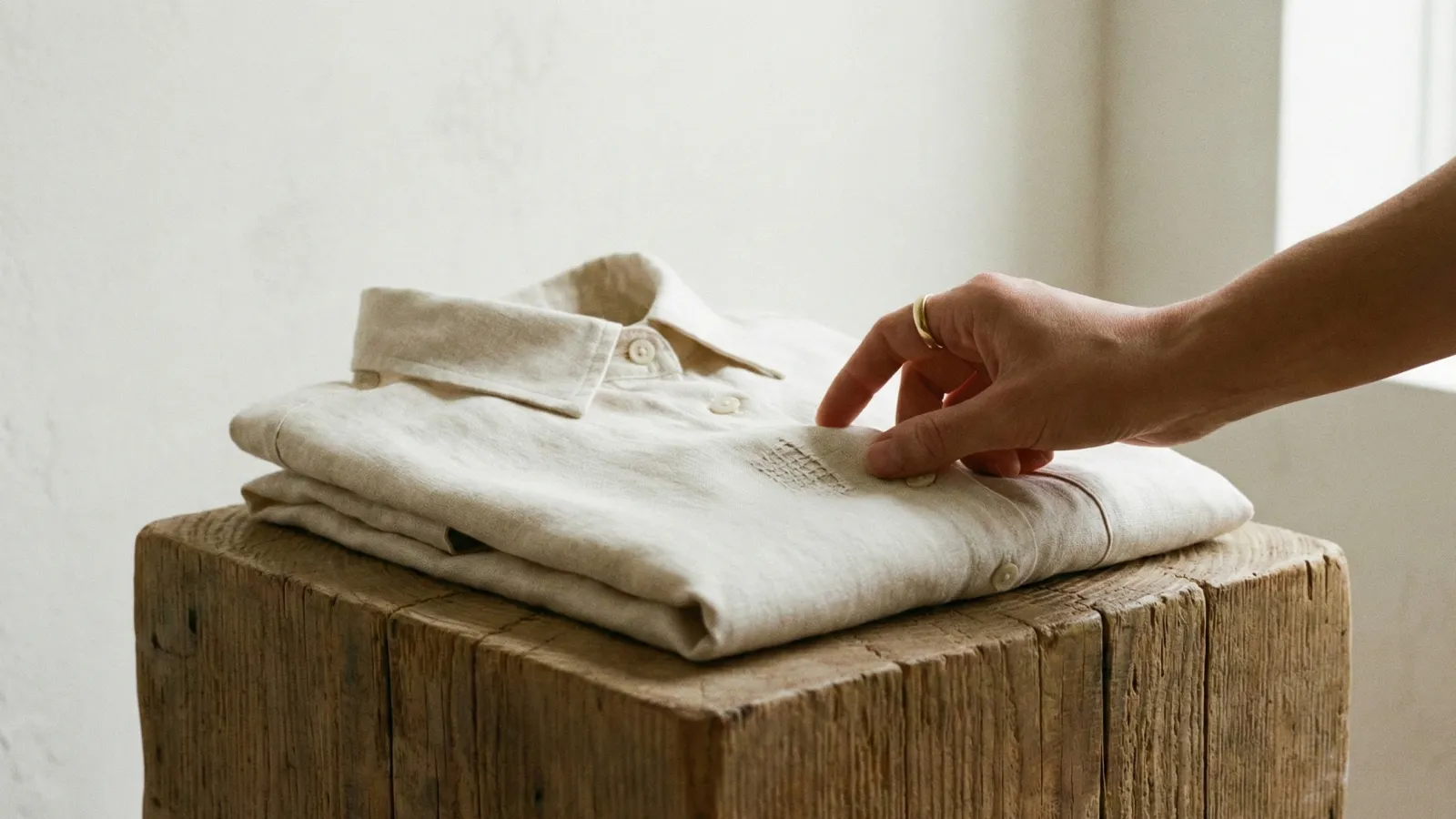
Illustration generated with AI, edited by Weloop.
At its heart, recommerce is a powerful tool for promoting sustainability. By giving products a second, third, or even fourth life, it directly challenges the linear “take-make-waste” model of modern commerce. This shift towards circularity has a profoundly positive environmental impact.
Every item that is resold is one less item that needs to be produced from virgin raw materials and one less item heading to the landfill. This simple act of reuse helps conserve resources, reduce pollution, and lower our collective carbon footprint. Let’s delve into how recommerce is making fashion more sustainable.
Reducing Waste Through Circular Fashion
The fashion industry is notorious for its waste. A shocking amount of clothing ends up in landfills every year, often after being worn only a few times. Circular fashion aims to solve this problem by designing waste out of the system, and recommerce is a cornerstone of this movement.
By creating a market for pre-owned clothing, recommerce provides a practical alternative to throwing items away. It encourages the reuse of garments, extending their lifespan and keeping them in circulation for as long as possible. This simple act of passing on an item to a new owner is a powerful form of waste reduction.
This is the circular economy in action. Instead of a linear path from closet to landfill, clothes can loop back into the system to be worn and loved again. Every jacket, dress, or pair of jeans that is resold is a victory for circular fashion and a step towards a zero-waste future.
Lowering Carbon Footprint with Reused Goods
The environmental benefits of recommerce go beyond just reducing landfill waste. Reusing an existing item has a much lower carbon footprint than manufacturing a new one. The production of new apparel is an energy-intensive process that consumes vast amounts of water, raw materials, and power.
By choosing reused goods, we avoid the environmental impact associated with new production. Studies have shown that extending the life of a piece of clothing by just a few months can significantly reduce its carbon, water, and waste footprints. Reselling an item generates far less CO2 than creating a brand-new one.
When you participate in recommerce, you are directly helping to lower the overall demand for new manufacturing. This reduces the stress on our planet’s finite resources and helps mitigate climate change. It’s a simple choice with a powerful positive effect, making recommerce a key strategy for reducing the fashion industry’s environmental impact.
Future of Recommerce in the Fashion Industry
The future of the recommerce industry looks incredibly bright. It is growing at a much faster rate than traditional retail, and this momentum shows no signs of slowing down. As sustainability becomes an even greater priority for consumers and governments, recommerce is set to become an essential part of the fashion landscape.
The growing demand for affordable and eco-friendly options will continue to fuel innovation in this space. We can expect to see more brands integrating resale into their core business models and new technologies emerging to make the process even smoother. Let’s explore what’s next for recommerce.
Integrating Recommerce Into Mainstream Retail
The next big step for recommerce is its full integration into mainstream retail. In the future, it won’t be seen as a separate, niche market but as a standard offering alongside new items. We are already seeing major retailers launch their own recommerce models, from buy-back schemes to dedicated pre-owned sections on their websites.
This integration creates a seamless experience for the customer. Imagine being able to trade in an old coat for store credit and use it to buy a new one, all in the same transaction. This not only encourages participation in the circular economy but also builds incredible brand loyalty.
As more retailers adopt this hybrid approach, the line between new and pre-owned will begin to blur. Shopping for second-hand will become as normal as buying new, making circularity a fundamental part of the retail experience. This shift will normalise the recommerce model for millions of shoppers.
Innovations in Recommerce Technology
Technology will continue to be a major driver of innovation in recommerce. We can expect to see advancements that make the entire process more efficient, transparent, and enjoyable for everyone involved. Artificial intelligence, for instance, will get even better at authenticating products, setting dynamic prices, and predicting trends in digital marketplaces.
Another area of innovation is traceability. Technologies like blockchain could be used to create a digital passport for every garment, tracking its journey from production through multiple owners. This would provide ultimate transparency and guarantee authenticity, further boosting customer trust.
Ultimately, these technological advancements will enhance the customer experience. Recommerce solutions will become more personalised and user-friendly, making it easier than ever to buy and sell pre-owned fashion. For brands, this technology will unlock new efficiencies and make it simpler to manage and scale their circular initiatives.
Conclusion
In conclusion, recommerce is revolutionising the fashion industry by offering sustainable alternatives to traditional shopping. By embracing practices such as resale, trade-in, repair, and rental, brands not only enhance their sustainability efforts but also attract eco-conscious consumers looking for value and variety. Whether it’s through peer-to-peer platforms or brand-led initiatives, the benefits extend beyond just saving money; they also contribute to a circular economy that reduces waste and lowers carbon footprints. As consumer trends increasingly favour environmentally friendly options, fashion brands must adapt to this growing demand and innovate accordingly. Are you ready to explore the world of recommerce? Your journey towards a more sustainable fashion future awaits!
Frequently Asked Questions
Does recommerce only apply to fashion, or are other industries adopting it?
While fashion is a huge part of the recommerce market, the circular economy model is being adopted across many industries. Electronics, furniture, home appliances, and even sporting goods have thriving resale markets. Any durable product with a long lifespan is a great candidate for recommerce.
How do brands maintain the quality of refurbished clothing?
Brands maintain quality through rigorous inspection, professional cleaning, and expert refurbishment. Many use detailed checklists and a grading system to ensure every item is in good condition. For luxury goods, a multi-step authentication process is also used to verify authenticity and build trust.
What makes recommerce products attractive to shoppers?
Shoppers are drawn to recommerce for several reasons. The lower prices make fashion more affordable, while the desire to reduce their environmental impact makes it a sustainable choice. Digital marketplaces also offer access to unique, vintage items that can’t be found in traditional stores, attracting new customers.
What are the different models of recommerce available for fashion brands?
Fashion brands can choose from several recommerce business models. These include peer-to-peer resale platforms, brand-led trade-in or buy-back programs, and rental services for clothing and accessories. Each model offers a different way to participate in the secondary market and extend product life.
How does recommence contribute to sustainability in the fashion industry?
Recommerce promotes sustainability in the fashion industry by extending product life cycles, reducing waste, and minimizing resource consumption. Through practices like resale, trade-in, repair, and rental, brands can foster a circular economy that lessens environmental impact and encourages conscious consumerism.
What are the benefits of implementing a trade-in program for fashion brands?
A trade-in program helps brands control their resale value and secure a supply of authentic pre-owned goods. By offering store credit, it encourages customer loyalty and repeat purchases. It also opens up new revenue streams and expands the customer base to those seeking more affordable options.
How can fashion brands effectively market their recommerce initiatives to consumers?
Brands can market their recommerce initiatives by highlighting the benefits of sustainability and value. Storytelling about the positive environmental impact can attract new customers. Building customer trust through transparency about quality and authentication is also a key marketing strategy to encourage participation in their resale program.
What is recommerce in fashion, in simple terms?
Recommerce is when a fashion brand makes money from products after their first sale. Instead of a one time transaction, the brand supports resale, rental, repair, memberships, or subscriptions to keep items in use longer. The goal is to extend product life, reduce waste, and create new revenue and customer touchpoints.
What’s the difference between recommerce, circular fashion, and second hand?
Second hand is the market outcome: used items being sold again. Circular fashion is the broader strategy: design, supply chain, and business models that keep materials in use. Recommerce is the commercial layer: the specific programs and systems a brand runs (or partners for) to enable resale, rental, repair, memberships, and subscriptions.
Which recommerce model should a fashion brand start with?
Start with the model that matches your product and operations. Resale is often the easiest for durable, branded items. Repair works well if you already have quality issues, returns, or a loyal customer base. Rental fits occasionwear and premium pieces. Membership and subscription work when you can deliver ongoing value and predictable demand.
Does recommerce cannibalize new product sales?
It can, but many brands see recommerce as additive when positioned well. Resale can attract new customers, capture value from returns and dormant inventory, and increase lifetime value through trade in and repeat engagement. Cannibalization usually happens when pricing and positioning are unclear. Clear segmentation helps: new, like new, pre loved, and repaired.
What products work best for recommerce (and which ones usually fail)?
Best candidates are durable, recognizable items with stable demand: outerwear, denim, bags, shoes, and quality basics. Items fail when they have low original quality, poor durability, heavy hygiene concerns, or low resale value relative to handling costs. Recommerce works best when the product was designed to last and can be assessed quickly.
How do brands price recommerce products and services?
For resale, pricing typically balances condition, original price, demand, and processing costs, and it often uses clear condition grades. For rental, price is driven by wear and tear, cleaning, shipping, and utilization rate. Repair pricing should be simple and menu based. Memberships and subscriptions must bundle clear benefits that feel worth renewing.
What does a recommerce program require operationally?
Most programs need intake (returns, trade in, or customer submissions), quality checks, grading, photography, pricing, and inventory management. You also need logistics flows for shipping, cleaning or refurbishment, and customer support for issues like condition disputes. The simpler your process, the better your margins. Document standards early so teams and partners stay consistent.
Should brands build recommerce in house or partner with a provider?
In house gives maximum control over brand experience, data, and margins, but it takes time, skills, and operational capacity. Partnering is faster and reduces complexity, but can limit customization and may add fees. Many brands start with a partner to validate demand, then bring more in house once volume justifies dedicated workflows and tooling.
What KPIs should brands track to measure recommerce success?
Track contribution margin per recommerce order, recovery rate on returns or buybacks, time to resell, sell through rate, and customer metrics like repeat purchase and lifetime value. Also monitor operational KPIs: cost per processed unit, dispute rate, and refund rate. The best programs improve both profitability and retention, not just sustainability messaging.
What regulations and compliance topics should brands consider for recommerce in Europe?
Key areas include consumer rights for returns and warranties, product safety obligations, VAT and invoicing rules, data privacy (GDPR), and transparent claims around sustainability. If you do trade in or memberships, clarify terms, credits, and expiry rules. Requirements vary by country, so brands should align policies with local rules and legal counsel.
This article has been reviewed for accuracy by the Weloop team.
Some illustrations are AI-generated and labeled. Report any issue.